<?xml version="1.0" encoding="utf-8"?><feed xmlns="http://www.w3.org/2005/Atom" xml:lang="en"><generator uri="https://jekyllrb.com/" version="3.10.0">Jekyll</generator><link href="https://jamiepinheiro.com/feed.xml" rel="self" type="application/atom+xml" /><link href="https://jamiepinheiro.com/" rel="alternate" type="text/html" hreflang="en" /><updated>2026-11-18T23:12:51+00:00</updated><id>https://jamiepinheiro.com/feed.xml</id><title type="html">Jamie Pinheiro</title><subtitle>Software engineer. Projects, writing, photography, and travel by Jamie Pinheiro.</subtitle><author><name>Jamie Pinheiro</name></author><entry><title type="html">The State of the Truth Machines</title><link href="https://jamiepinheiro.com/blog/the-state-of-the-truth-machines/" rel="alternate" type="text/html" title="The State of the Truth Machines" /><published>2026-02-15T21:45:13+00:00</published><updated>2026-02-15T21:45:13+00:00</updated><id>https://jamiepinheiro.com/blog/the-state-of-the-truth-machines</id><content type="html" xml:base="https://jamiepinheiro.com/blog/the-state-of-the-truth-machines/"><![CDATA[<figure><img src="/assets/blog/truth-machines-1.jpg" alt="Cover illustration for The State of the Truth Machines"></figure>

<p>Recently, I’ve been thinking a lot about how to model humanity’s ability to discover, preserve and propagate objective facts. I’ve come to enjoy the metaphor of <em>Truth Machines</em> - abstract systems and collections of human interactions, geared to do such a task.</p>

<p>In humanity’s recent past, I believe one of the strongest versions of these has been the open, “web2” internet - a place where anyone can easily and freely voice an opinion, share content, and participate in the arbitration process of this global, decentralized Truth Machine. It isn’t perfect; there are still niches that succumb to “fake news”, but all-in-all, I think it’s pretty effective at distributing the truth (I can quickly learn the outcomes of elections, economies, sports games, all happening thousands of miles away from me).</p>

<p>I believe that a core reason for why this worked was that voicing an opinion required both time and effort. With the advent of LLMs, both of these requirements are breaking - it’s faster and cheaper than ever to put media into the internet. What does this mean for our global, web2-based Truth Machine? How difficult would it be able to ‘pollute’ some truth? [1] I think there’s a very real chance it falls apart in the next N years...</p>

<p>I’ve been digging into some of the systems that could potentially form/inspire next generation of Truth Machines:</p>

<h2>Community Notes</h2>

<figure><img loading="lazy" src="/assets/blog/truth-machines-2.png" alt="An example of a Community Note on X"></figure>

<p>X allows users to propose and vote on additional context on tweets. Behind the scenes, there’s a few things happening. To my knowledge:</p>

<ol>

<li>Accounts can opt into the Community notes program</li>

<li>Initially, they can just vote on other notes that have been proposed (even ones not yet being shown). Voting “correctly” (ie. with the majority), increases their “Rating Impact” score</li>

<li>Once their Rating Impact is high enough, they can write the notes themselves, and accordingly gain “Writing Impact” based upon how others vote. After sufficient votes, the notes get shown to all users</li>

<li>I can assume users with a low/negative impact will just get bared from program eventually</li>

</ol>

<p>This system is interesting. I like that it meets fact-checkers close to the facts that are being checked. I think I’d have the strongest ability to fact check things that are within my domain of interests, which hopefully my X algorithm surfaces to me. It also makes use of the entire userbase to perform fact checking (in practice I imagine this is a very tiny portion of its users). Establishing reputation scores also maybe encourages voting correctly? It’s also ~free for X - users aren’t rewarded in any way.</p>

<p>I think the biggest limitation is the appeal to users, I imagine relying on benevolent users doesn’t seem long-term scalable. I don’t think I’d enjoy combing through AI-slop, yet alone, doing it for free...</p>

<h2>Pay-to-play</h2>

<figure><img loading="lazy" src="/assets/blog/truth-machines-3.png" alt="X Premium account verification and pricing"></figure>

<p>The other thing X is doing to preserve its Truth Machine, is paid (verified) accounts. Users can pay $8/month for the blue checkmark. By upweighting verified accounts in the algorithm, it effectively made it pretty expensive to share ideas (recall, in our current machine, it’s ~free). This feels required to avoid millions of bots from flooding the threads and polluting the truth.</p>

<p>There’s a hard balance to strike between not pricing out users, and making it too expensive for bot armies to exist. I’d claim there isn’t a great option here, $8/m feels expensive enough to price out a large fraction of users, as well as not expensive enough to disway bot armies from swaying the truth in high stakes topics (eg. elections, where already millions of dollars are poured into campaigns).</p>

<h2>Plutocratic Voting</h2>

<figure><img loading="lazy" src="/assets/blog/truth-machines-4.jpg" alt="Disputed claims in the UMA voting interface"></figure>

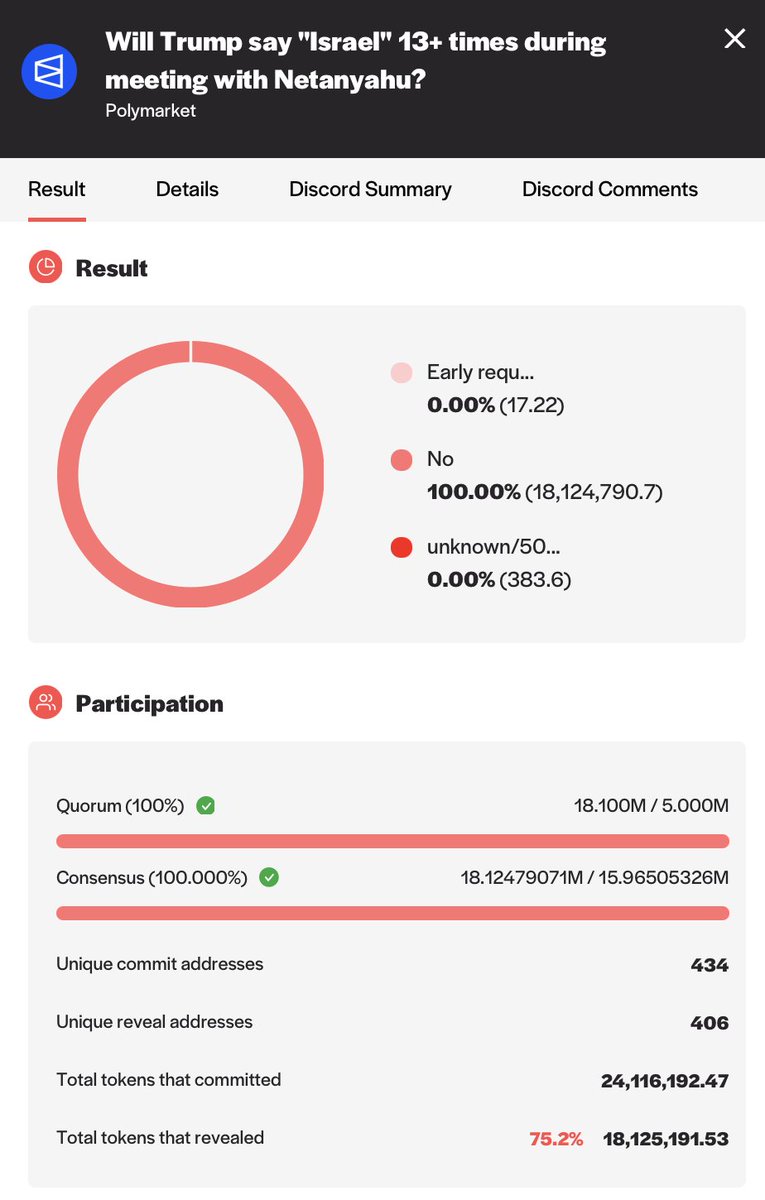
<p>Outside of X, prediction markets also require robust Truth Machines to resolve markets. Polymarket uses UMA, a crypto-native platform, where users can vote to establish validity of claims. In the same shape as many Plutocratic Defi protocols, votes are weighted by the number of tokens staked. To incentivize fact-checking, claims have bounties attached to them (they&#x27;re quite high, usually $750 for Polymarket).</p>

<p>I generally like the idea of tying strong financial incentives into the Truth Machines, it seems to solve the “get people to vote” issue that I think Community notes struggle with. However, UMA currently encourages all “staked” users to vote in <em>every</em> disputed claim, which doesn’t feel long term sustainable. Each voting period already has 20-30 disputes to vote in. I’m sure they’ll eventually have to solve this problem, as with every other prediction market platform that wants to aggressively add more markets. Separately, this doesn’t attempt to solve fairness in any way, the truth is owned by the token holders.</p>

<h2>Final Thoughts</h2>

<p>By some crude (and possibly incorrect) model of the world, we’re at the cusp of losing the ability to discern facts from fiction in all online content; our web2 Truth Machine is failing. As such, I think one of the largest, humanity-scale problems we’ll face in the next couple of years is coming up with better Truth Machines, robust to the world of LLM generated content.</p>

<p>[1] What does JD Vance even look like? I forget</p>]]></content><author><name>Jamie Pinheiro</name></author><summary type="html"><![CDATA[How community notes, paid accounts, and prediction markets might help us discover and preserve facts in a world of LLM-generated content.]]></summary><media:thumbnail xmlns:media="http://search.yahoo.com/mrss/" url="https://jamiepinheiro.com/assets/blog/truth-machines-1.jpg" /><media:content medium="image" url="https://jamiepinheiro.com/assets/blog/truth-machines-1.jpg" xmlns:media="http://search.yahoo.com/mrss/" /></entry><entry><title type="html">Searching for Cyclic TV Reference Paradoxes</title><link href="https://jamiepinheiro.com/blog/searching-for-cyclic-tv-reference-paradoxes/" rel="alternate" type="text/html" title="Searching for Cyclic TV Reference Paradoxes" /><published>2022-06-05T14:19:02+00:00</published><updated>2022-06-05T14:19:02+00:00</updated><id>https://jamiepinheiro.com/blog/searching-for-cyclic-tv-reference-paradoxes</id><content type="html" xml:base="https://jamiepinheiro.com/blog/searching-for-cyclic-tv-reference-paradoxes/"><![CDATA[<figure><img alt="Brooklyn Nine-Nine episode with Sarge at hospital claiming to watch a lot of “Grey’s Anatomy”" src="/assets/blog/tv-paradoxes-1.png" /></figure>

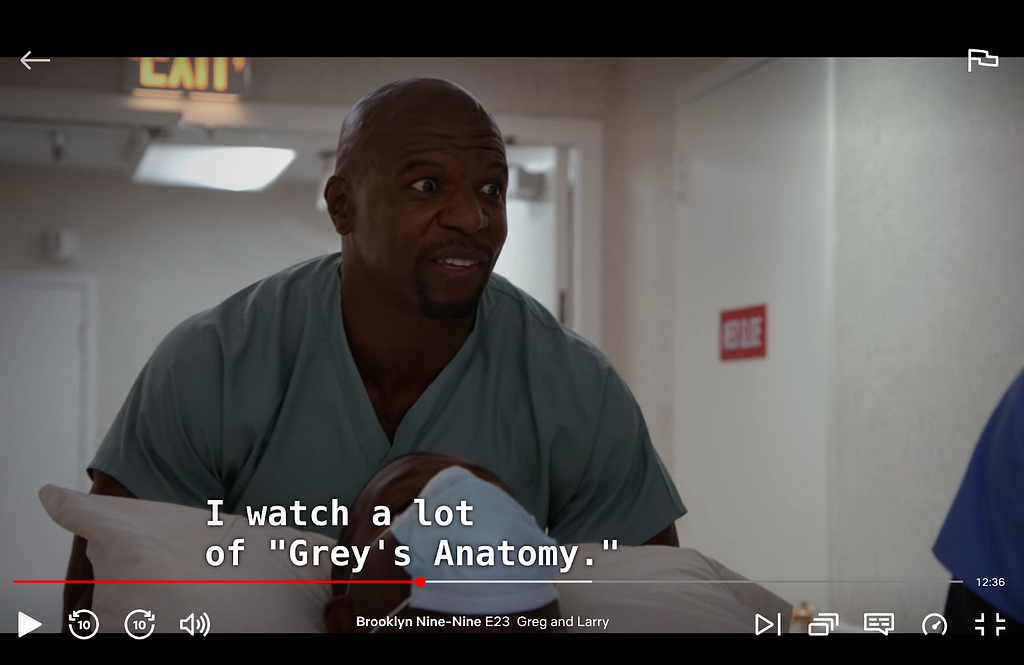
<p>A while back I was watching Brooklyn Nine-Nine and came across this particular line — <em>I watch a lot of Grey’s Anatomy</em>. At first glance, there isn’t anything too special about this. But after some more thought, I realized there was a deeper implication to this singular line — in the fictional universe that Brooklyn Nine-Nine takes place in, Grey’s Anatomy exists as a TV show. More and more, I started noticing these sorts of fictional references across many different TV shows. Eventually, this got me wondering what would happen if a bunch of references like these formed a cycle? Such as if Grey’s Anatomy also referenced Brooklyn Nine-Nine. If that were to happen, both shows would be relying on the other being fictional in their respective universes, which cannot both be true simultaneously — a paradox!</p>

<p>There are a couple of well-documented pop culture paradoxes, however, I couldn’t find one that covers this exact situation (if you know of one, let me know!), so I’ve decided to call them <strong><em>Cyclic TV Reference Paradoxes</em></strong>. Since there’s no governing body that dictates what shows can and cannot be referenced by other shows, these paradoxes must come up — right? Due to a mixture of boredom and curiosity, I decided to find out for certain.</p>

<h2>Defining the Search Scope</h2>

<p>Right off the bat, I decided to limit the scope of my search to exclusively TV shows which have the nice property of being released as episodes over some period of time. This allows them to temporally overlap with other TV shows enabling them to reference one another while they’re both actively being produced. It would be impossible for two movies to do this as one would be produced before the other even existed. Additionally, I decided to focus on <em>popular</em> TV shows as I guessed these would be the most likely to be referenced by other shows.</p>

<p>Then, to find these paradoxes, I realized I would need <em>a lot</em> of TV references. I quickly found a few Fandom wikis for certain TV shows that contain fan-maintained lists of outward references (see <a href="https://lostpedia.fandom.com/wiki/Outside_references_to_Lost">Outside references to Lost</a>). Unfortunately, these were pretty sparse and were not consistent across Fandoms. The next best option I had was to look at the subtitles for TV shows. By searching the dialog for names of other TV shows, direct references could be found. This would miss out on indirect references (ie. mentioning “Baby Yoda” to reference The Mandalorian), but they weren’t entirely required for this project’s needs.</p>

<h2>The Technicals</h2>

<p>The first step was then getting all the required subtitles. Easier said than done. Subtitles were scattered across many different services and platforms. Luckily, I stumbled across <a href="https://github.com/Diaoul/subliminal">Subliminal</a> — a python library that abstracts this complexity away and fetches subtitles across multiple subtitles providers. Pairing this with <a href="https://developers.themoviedb.org/3/tv/get-popular-tv-shows">TMDB’s API</a> — a great source on TV show metadata (names, popularity, episode/season counts), I managed to download over 40,000 subtitle files over a couple of days.</p>

<p>Great. However, this amounted to over 5 million lines of subtitles. To do anything meaningful with this amount of data, it needed to be indexed in some way. I ingested all the subtitle data into <a href="https://github.com/mchaput/whoosh">Whoosh</a> — a python text-searching library, allowing for quick, fuzzy searches to be done to find subtitles. From there, I could quickly search the names of different TV shows to find references to them within other shows’ dialog.</p>

<h2>Some Subtleties</h2>

<p>Unfortunately, this didn’t work great right away, there were a couple of subtleties that had to be accounted for:</p>

<ul><li>Generic names — TV shows like “Suits” returned a ton of false positives. To account for that, I dropped all TV shows with names that were too generic, leaving <a href="https://jamiepinheiro.com/cyclic_tv_reference_paradox_finder/tv_shows.csv">~300 TV shows</a>.</li><li>Intra-universe References — It became apparent that TV shows would often reference other TV shows in the same cinematic universe as a form of cross-promotion. Since these sorts of references weren’t fictional (ie. referencing “The Flash” from “Arrow”), I dropped any references between TV shows in the same universe.</li><li>Linguistic Context — There’s a big difference between “did you watch stranger things?” and “stranger things have happened”. Understanding the linguistic context of the dialog was out of scope for the nature of this project, so I ended up manually filtering all references as a final step.</li></ul>

<p>Accounting for these nuances, I was left with a total of <a href="https://jamiepinheiro.com/cyclic_tv_reference_paradox_finder/references.csv">2192 TV references</a>. There had to be at least one cycle in there!</p>

<h2>Finding Cycles</h2>

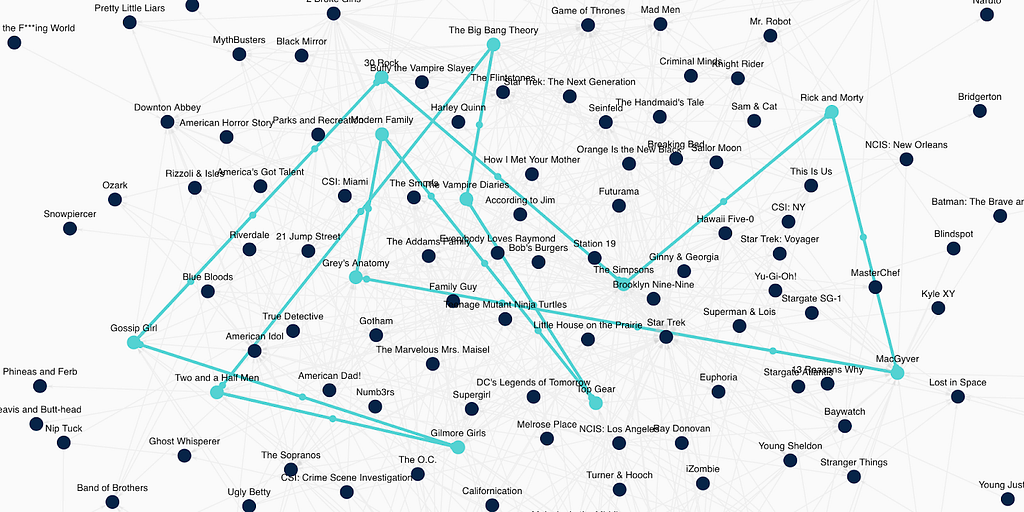
<p>I built a React web app that visualized the TV reference data in a graph. Each node in the graph represents a TV show, and the edges indicate that a TV show references another one (possibly multiple times).</p>

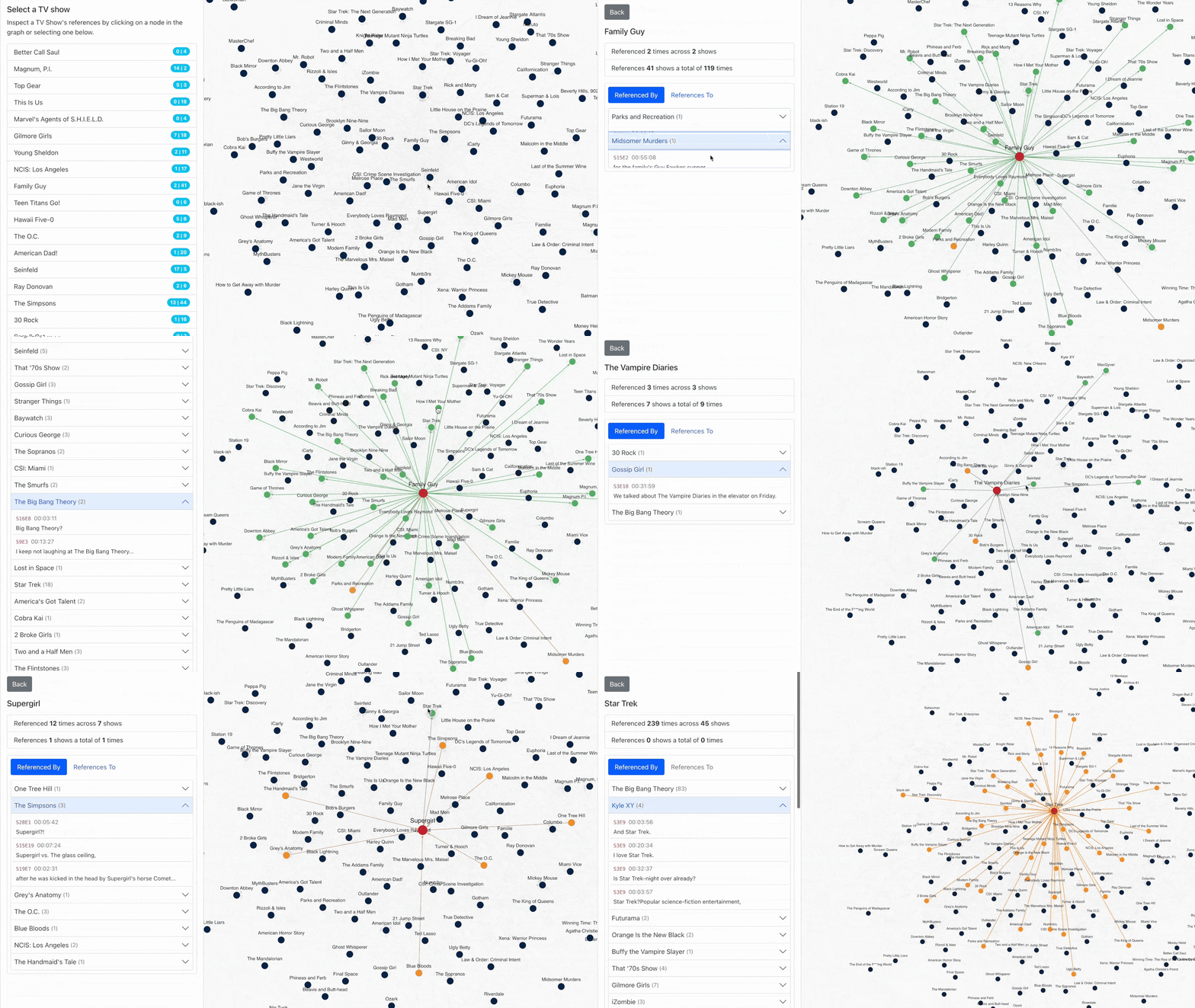
<figure><img loading="lazy" alt="A demo of a react web app for visualizing TV reference data and finding Cyclic TV Reference Paradoxes." src="/assets/blog/tv-paradoxes-2.gif" /><figcaption><em>Cyclic TV Reference Paradox Finder — try it out </em><a href="https://jamiepinheiro.com/cyclic_tv_reference_paradox_finder/"><em>here</em></a><em>!</em></figcaption></figure>

<p>The web app runs a depth-first search to find any cycles, and was able to find a total of 72 Cyclic TV Reference Paradoxes!</p>

<p>Some were small — just two TV shows referencing each other. Others were much larger and more intricate — being made up of many TV shows (the largest being made up of 12).</p>

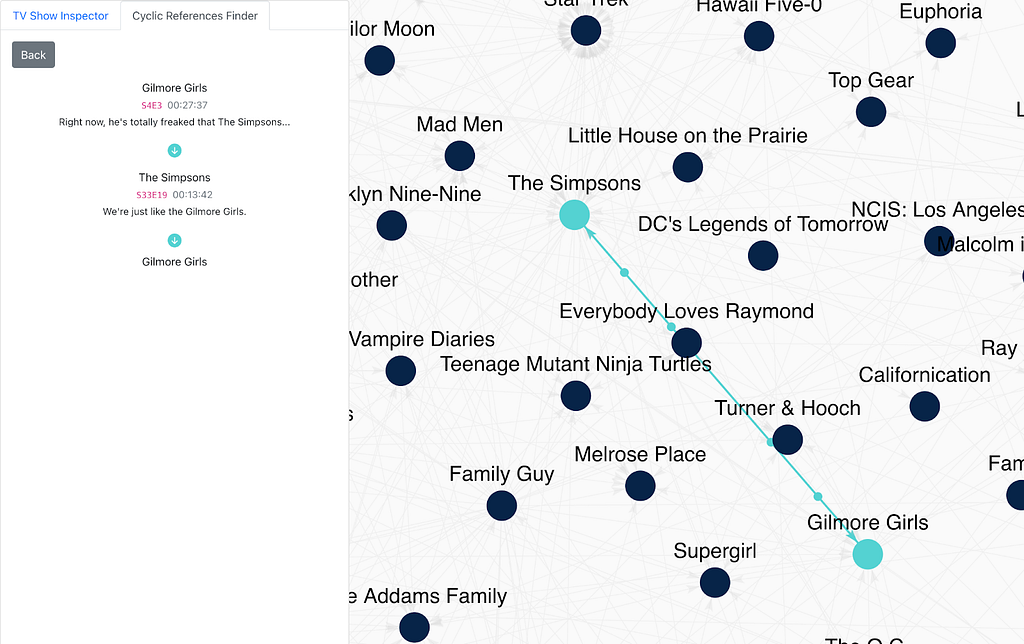
<figure><img loading="lazy" alt="A small cycle of TV show references" src="/assets/blog/tv-paradoxes-3.png" /></figure>

<figure><img loading="lazy" alt="A larger cycle of TV show references" src="/assets/blog/tv-paradoxes-4.png" /><figcaption>Small cycle (left), large cycle (right)</figcaption></figure>

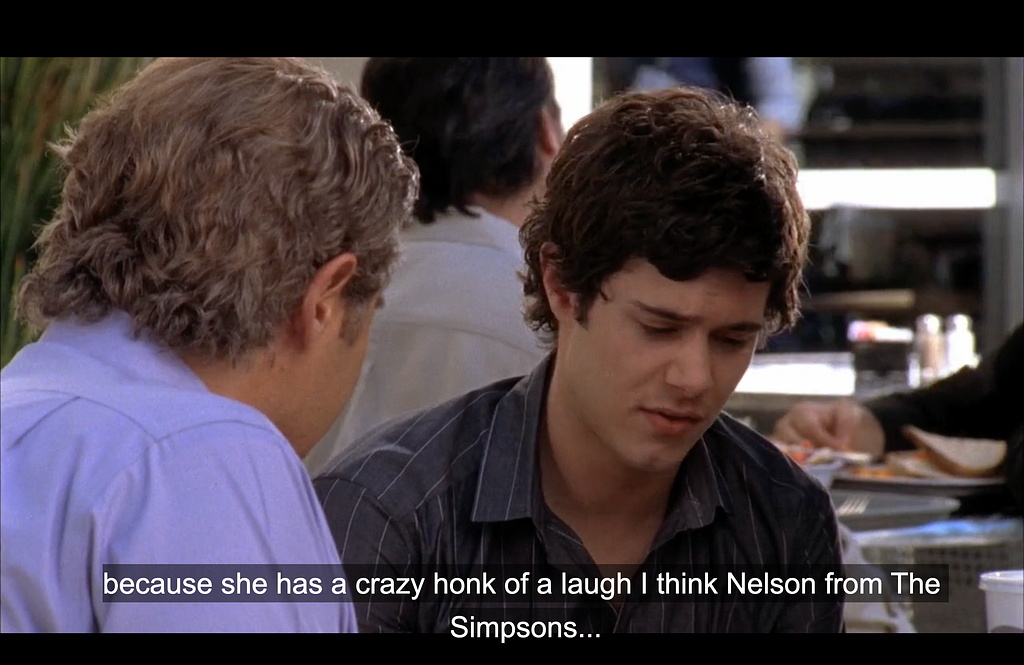
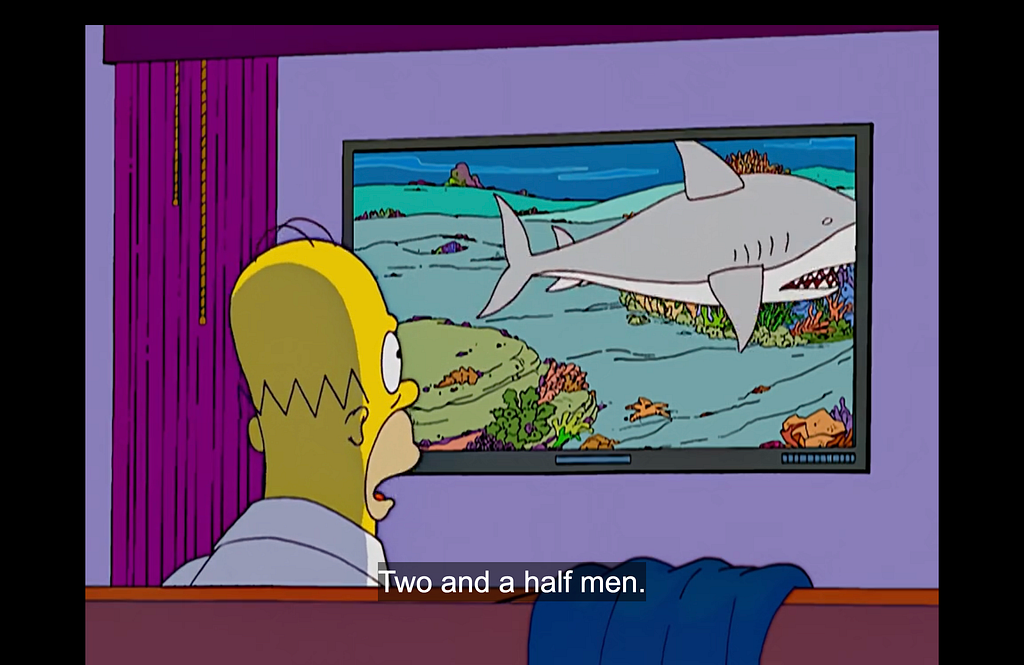
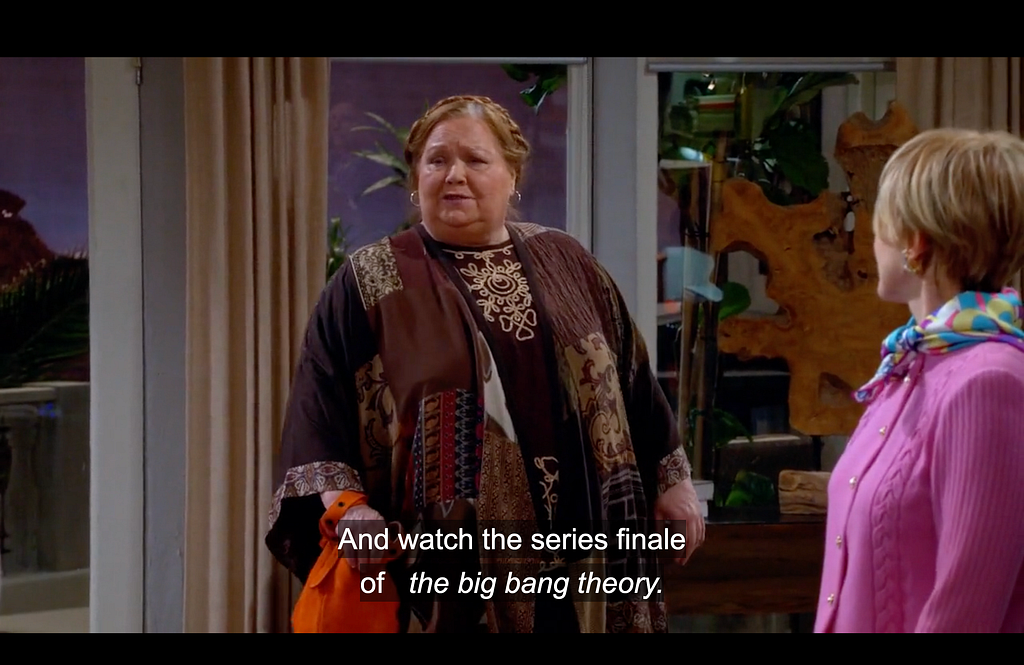
<p>All in all, it was quite cool finding these cycles and proving the existence of these paradoxes. Here’s a set of screencaps illustrating another one of these paradoxes.</p>

<figure><img loading="lazy" alt="The O.C. references The Simpsons" src="/assets/blog/tv-paradoxes-5.png" /></figure>

<figure><img loading="lazy" alt="The Simpsons references Two and a Half Men" src="/assets/blog/tv-paradoxes-6.png" /></figure>

<figure><img loading="lazy" alt="Two and a Half Men references The Big Bang Theory" src="/assets/blog/tv-paradoxes-7.png" /></figure>

<figure><img loading="lazy" alt="The Big Bang Theory references The O.C." src="/assets/blog/tv-paradoxes-8.png" /><figcaption>The O.C. -&gt; The Simpsons -&gt; Two and a Half Men -&gt; The Big Bang Theory -&gt; The O.C.</figcaption></figure>

<h2>Other Findings</h2>

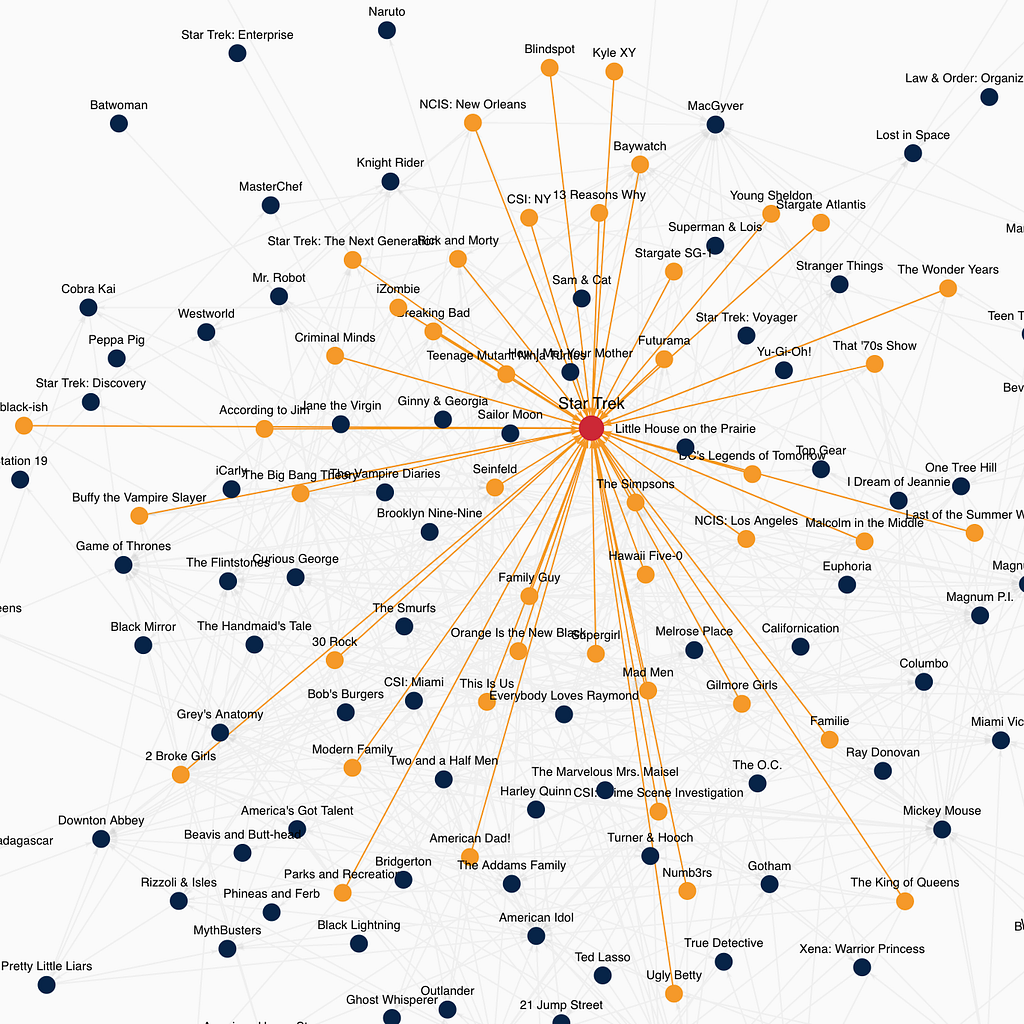
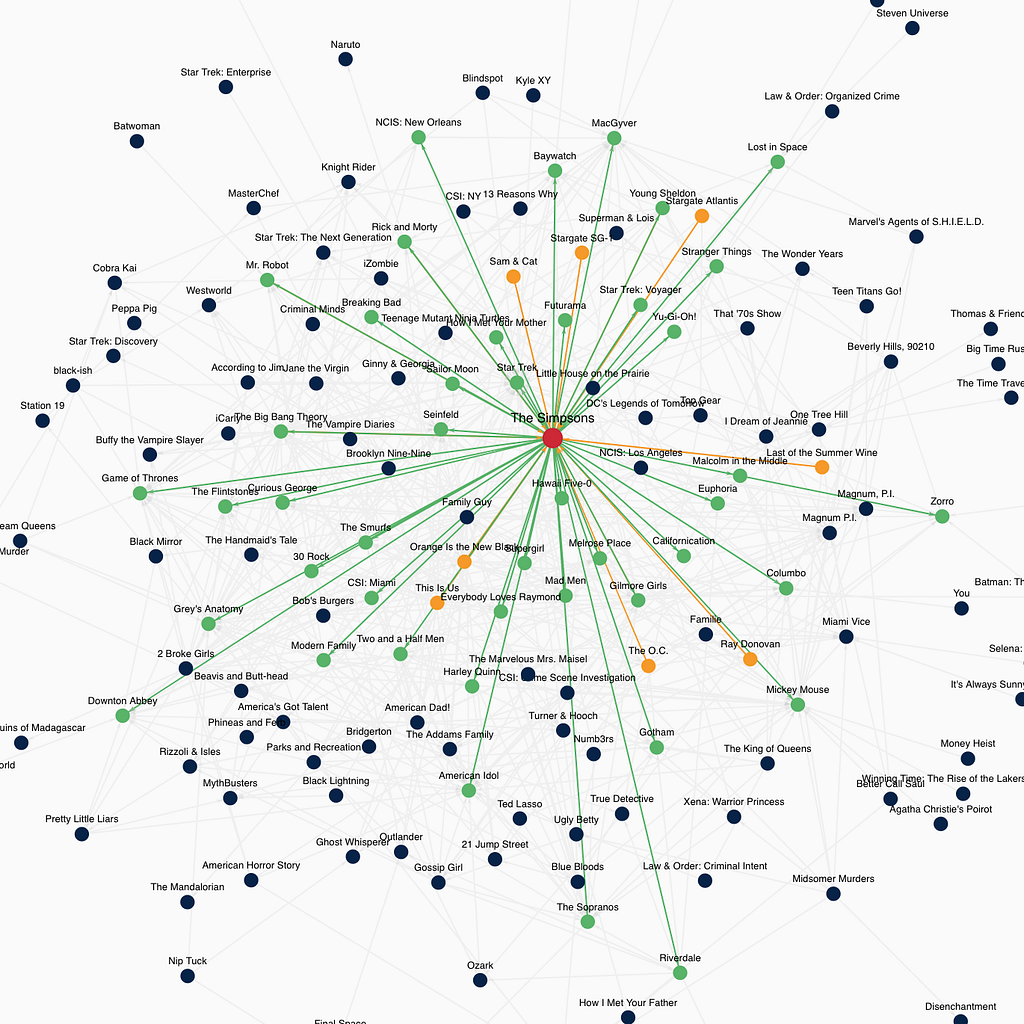
<p>There were some other interesting findings this tool could illustrate well. The most referenced show was unsurprisingly Star Trek. It was referenced 239 times across 45 shows. Interestingly, there weren’t any outwards references from Star Trek due to it being an older show. The show that references the most other shows was The Simpsons, referencing 44 shows a total of 127 times. The Simpsons was actually a part of every cycle found, which makes sense given how frequently it both references other shows, and is referenced.</p>

<figure><img loading="lazy" alt="Star Trek references in the TV reference graph" src="/assets/blog/tv-paradoxes-9.png" /></figure>

<figure><img loading="lazy" alt="The Simpsons references in the TV reference graph" src="/assets/blog/tv-paradoxes-10.png" /></figure>

<p>Looking through more shows, a pattern formed where more comedic shows (ie. The Big Bang Theory, Family Guy…) would reference other shows more often. Conversely, more serious shows (ie. Grey’s Anatomy, Game of Thrones…) would be referenced frequently, yet never reference other shows. It appears relevancy — through the use of external references, help shows come off as funny.</p>

<h2>So now what?</h2>

<p>With this project, the existence of Cyclic TV Reference Paradoxes has been shown. Does this have any real-world consequences? Not really. I think this is an amusing artifact of scriptwriters including small homages to some of their favorite TV shows. Individually they don’t mean much, but at scale, across hundreds of TV shows, they produce these interesting paradoxes that no writer probably gave a second thought about. The next time you’re watching a TV show and see one of these references, you can now rest assured that the reference is probably a part of a much larger, unintended paradox.</p>

<h2>Resources</h2>

<ul><li>Cyclic TV Reference Paradox Finder: <a href="https://jamiepinheiro.com/cyclic_tv_reference_paradox_finder">https://jamiepinheiro.com/cyclic_tv_reference_paradox_finder</a></li><li>Source code: <a href="https://github.com/jamiepinheiro/cyclic_tv_reference_paradox_finder">https://github.com/jamiepinheiro/cyclic_tv_reference_paradox_finder</a></li></ul>]]></content><author><name>Jamie Pinheiro</name></author><summary type="html"><![CDATA[Finding 72 cyclic TV reference paradoxes by searching more than 40,000 subtitle files and visualizing the references as a graph.]]></summary><media:thumbnail xmlns:media="http://search.yahoo.com/mrss/" url="https://jamiepinheiro.com/assets/blog/tv-paradoxes-1.png" /><media:content medium="image" url="https://jamiepinheiro.com/assets/blog/tv-paradoxes-1.png" xmlns:media="http://search.yahoo.com/mrss/" /></entry></feed>